
How viable are continued increases in the number of international students in the UK?
New economic modelling published today by Public First finds that the UK's universities have almost nowhere left to grow their international student numbers safely. The countries where growth is still available are, with a handful of exceptions, the countries least able to be relied on year after year.
The modelling scores every country on two measures: stability, meaning how dependable it is as an ongoing source of students, and opportunity, meaning how much additional growth is realistically available. The central finding is that the two barely overlap.
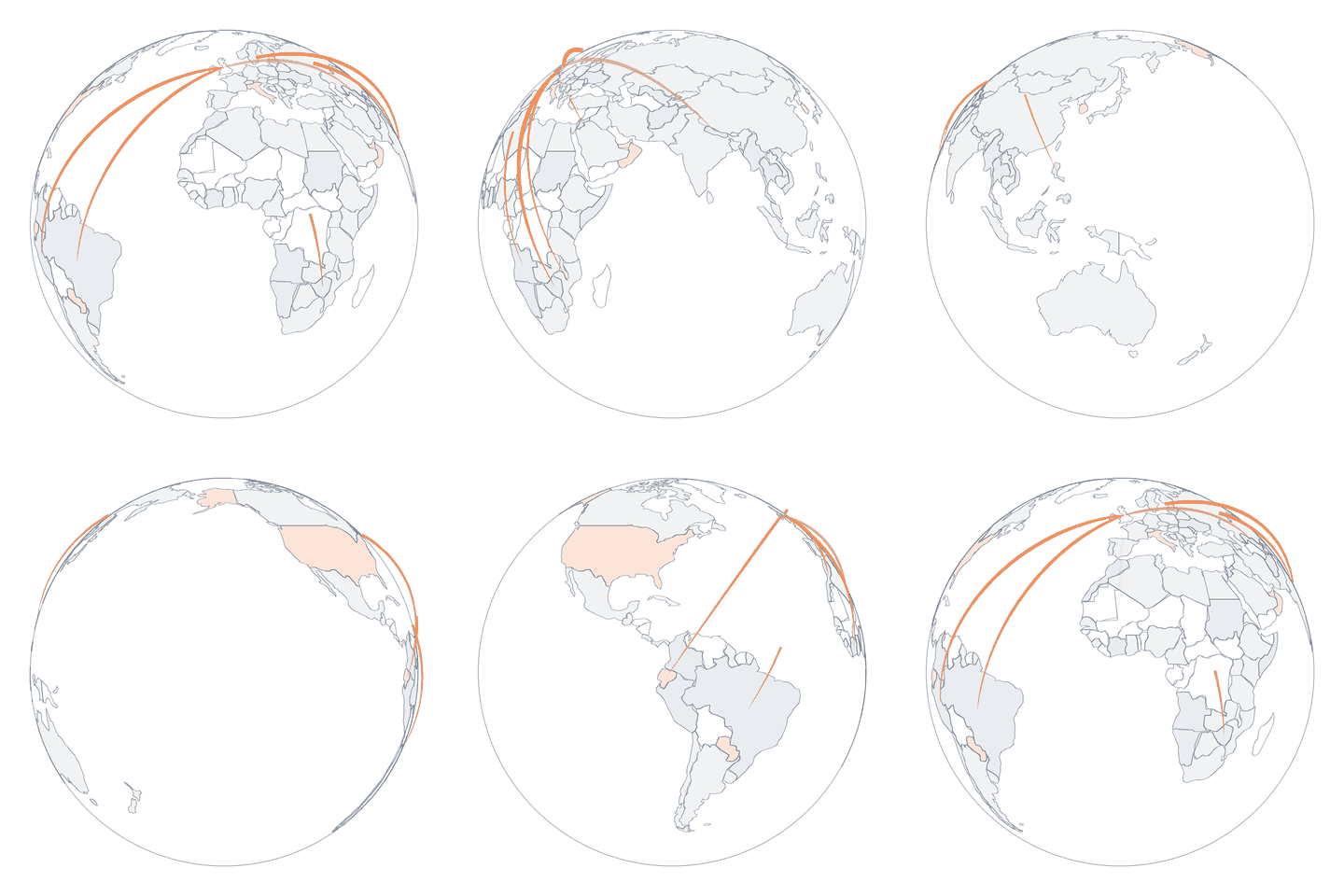
Key findings
- China has reached a ceiling. The potential for growth is set to decline as China's university-age population shrinks.
- The UK already recruits more students from India than India's demographics, incomes and competition from rival destinations can sustain. Demand fell 12 per cent in 2024-25, and the model expects that decline to continue under current Home Office policy.
- Growth is almost entirely available in less stable countries. Globally mobile countries, Zimbabwe, Nepal and Vietnam among them, are largely in the bottom 50% of countries for stability.
- Only nine countries sit in the "viable zone", scoring highly for both stability and opportunity, including the US, Ireland and Italy
- Emerging competitors could narrow the room further. If the UK begins losing students to high-quality Asian systems such as Japan, South Korea and Malaysia, or to regional hubs including India and South Africa, the headroom available for growth shrinks again.
The Office for Students' latest assessment of financial sustainability suggests 58 per cent of providers would be in deficit by 2028-29 in a scenario of "no growth" in international students.
In this context, the Public First model leaves three options: universities can pursue smaller and less stable countries, which demands far greater agility and carries more risk, including the risk of Home Office action; government can change the policy environment, including visa rules, so the UK out-competes the US, Canada, Australia and New Zealand for students from more stable countries; or the sector and government accepts contraction.
Jess Lister, Director, Higher Education at Public First, said:
“Our modelling doesn’t show a future in which international student recruitment continues to grow. The countries with real headroom left are mostly the ones whose numbers will swing sharply from one year to the next, with universities playing ‘recruitment whack-a-mole’ and chasing an ever-changing patchwork of less reliable countries. In a world in which higher education is so reliant on international student income to balance the books, this will only further increase the volatility in the sector.”