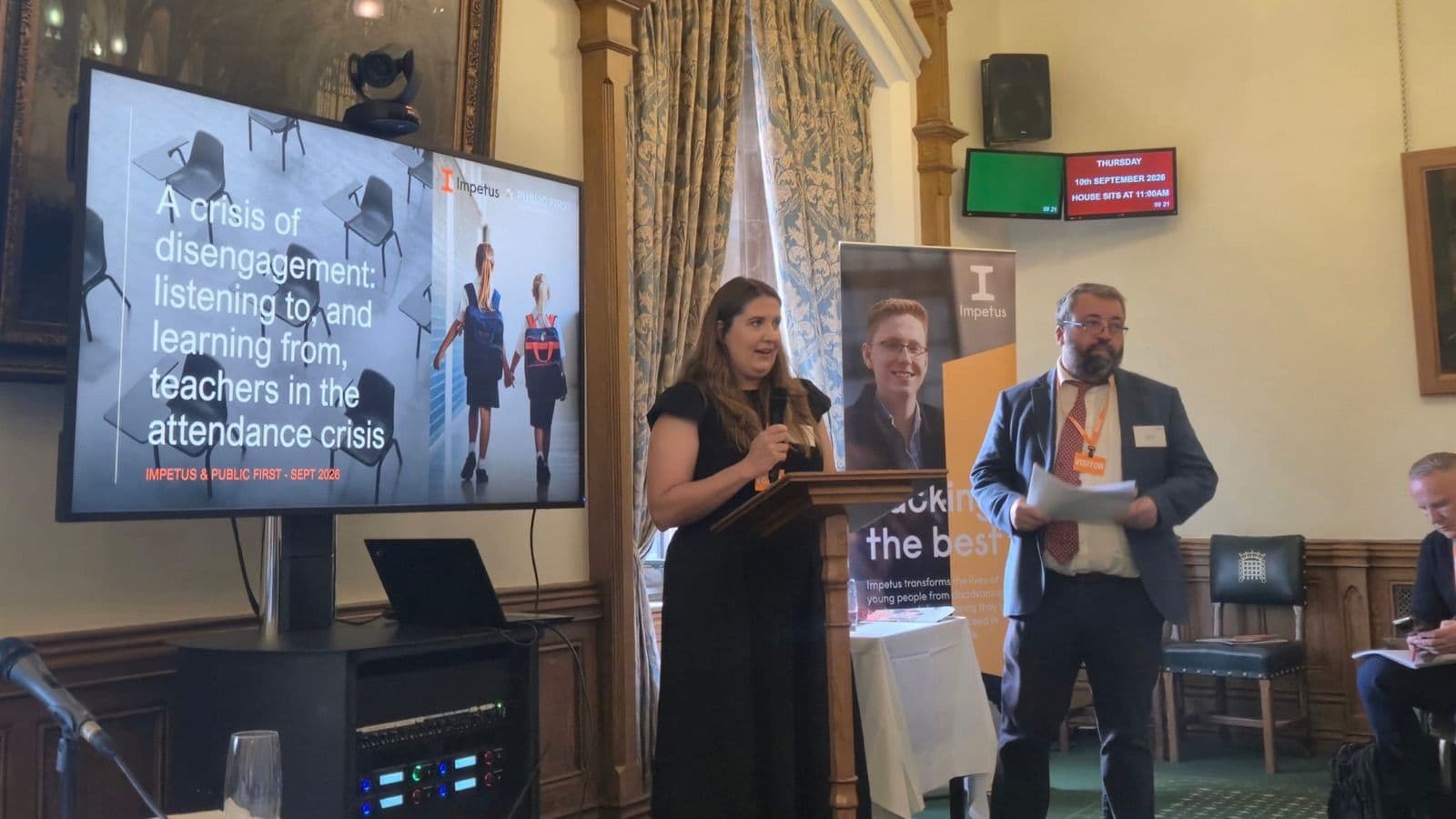
A crisis of disengagement: listening to, and learning from, teachers on school attendance, published today by Impetus and Public First, finds that school staff see the attendance crisis as a problem of disengagement, not behaviour, driven…
A crisis of disengagement: listening to, and learning from, teachers on school attendance, published today by Impetus and Public First, finds that school staff see the attendance crisis as a problem of disengagement, not behaviour, driven mostly by pressures they perceive as outside their control. Three findings stand out:
- Classroom teachers don't see attendance as a priority - many see it as an administrative burden that gets in the way of teaching, not part of the job.
- Classroom teachers don't believe every day in school matters - echoing the scepticism parents and pupils have already voiced about holiday fines and 'every day matters' messaging.
- Real progress means rebuilding the relationships, belonging and trust that make school feel worth showing up for - not just stronger enforcement.
The report is the third in a three-part research programme, following a 2023 study with parents and a 2025 study with pupils. It is based on nine focus groups with 62 secondary school staff in schools where more than a quarter of pupils are eligible for free school meals. Hearing from parents, pupils and school staff in turn has captured the full extent of the evolving challenge facing schools and families in improving attendance.
The report makes three recommendations to reverse the crisis, including:
- Build on the government's new pupil-level data tools and school targets to catch attendance problems before they become entrenched, tracking movement across bands and benchmarking against similar schools so improvement is recognised and effective practice shared, not just decline.
- Back the government's enrichment trials with sustained investment in belonging, including mentoring, trusted adults and transition support, not just one-off Friday clubs.
- Connect the government's technical education and employment reforms directly to attendance, starting well before Key Stage 4, so that pupils from disadvantaged backgrounds see a clearer link between showing up and securing a future worth having.
Read the full report, A crisis of disengagement: listening to, and learning from, teachers on school attendance, here.