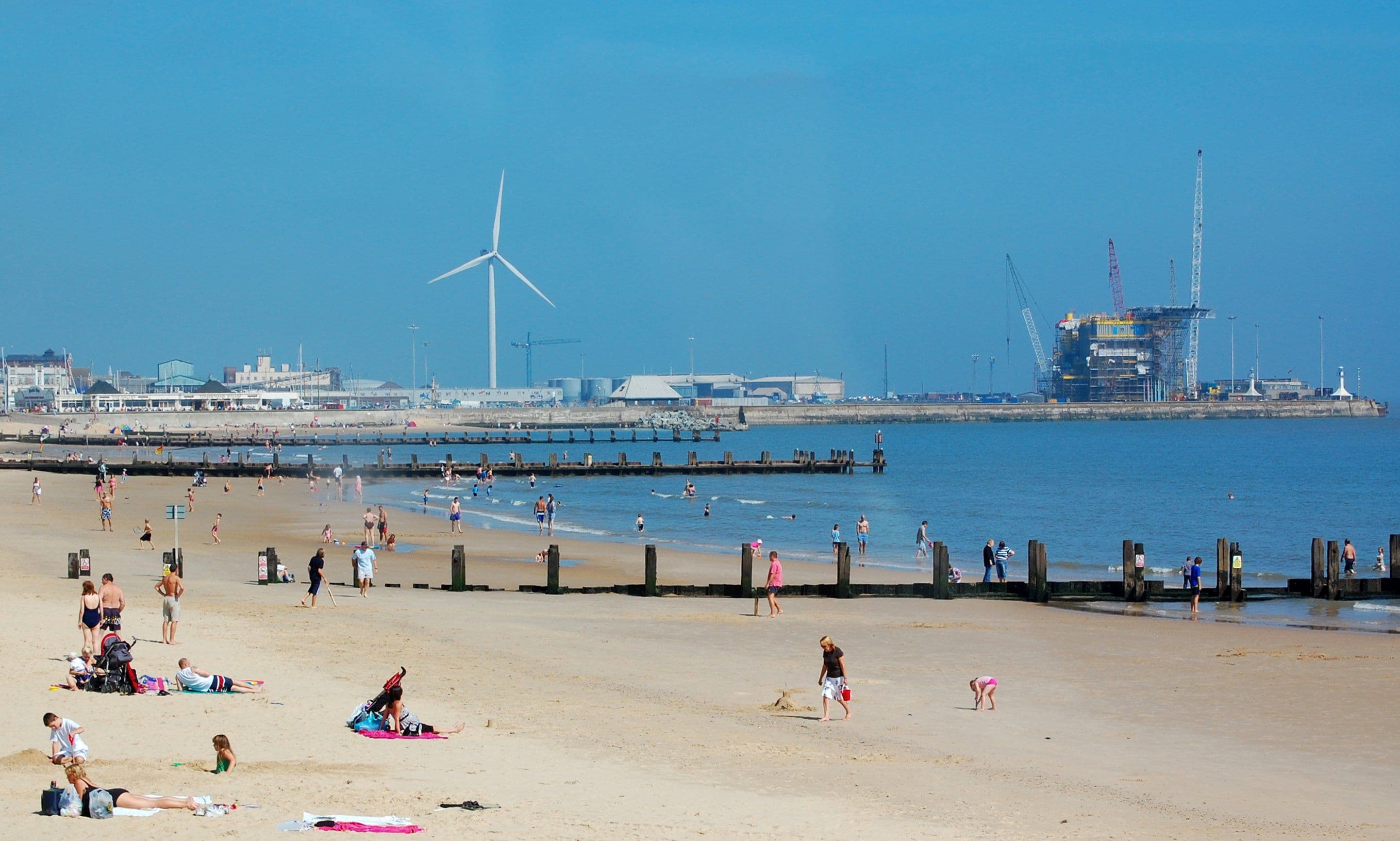
PF Global conducted immersive research in Lowestoft - the Labour seat in England most exposed to any financial losses associated with Burnham’s proposal to adjust the triple lock according to this analysis – to understand voter views and how risky Burnham’s move really is. The research was conducted in partnership with The Times.
Executive Summary
At Labour Conference last weekend, the new Prime Minister took on two policy problems that have plagued the country for decades: what to do about the unsustainable cost of the pensions triple lock and an adult social care system that is expensive for the taxpayer and families while delivering poor outcomes for too many.
Andy Burnham rolled the political dice and announced the triple lock would be ‘adjusted’ so that instead of rising by the highest of average earnings growth, inflation or 2.5%, it would increase by the highest of inflation, 2.5% or the amount needed to ensure the state pension keeps up with average earnings growth since the introduction of the new policy. The move is estimated to save approximately £15 billion a year by the end of the 2030s. The Prime Minister also announced these savings would be used to create a National Care Service. The new service will provide personal care on the same principles as the NHS, free at the point of use and available to all over-65s.
So, will the gamble pay off or have politicians of all stripes been right to kick this issue into the long grass for fear of the electoral consequences? To answer that question, PF Global has examined the electoral sensitivity of UK parliamentary constituencies to changes to the triple lock due to their concentration of over-65s who are reliant on the state pension as the primary source of income.
We found that:
- There are 20 seats where around one in five voters are currently aged over 65 and overwhelmingly dependent on the state pension as their primary source of income.
- The data reveals a stark divide: high-exposure constituencies are concentrated in coastal communities, rural areas, and post-industrial towns (such as Lowestoft, Clacton, Blackpool North and Fleetwood, Hartlepool, and the Stoke-on-Trent seats). Conversely, younger, metropolitan seats (predominantly in London, Manchester, and other major cities) have very low short-term exposure.
- Labour could be exposed across these high-dependence areas, many of which will be key marginal seats in the next election.
PF Global conducted an immersive in Lowestoft – one of the most exposed Labour seats in England to any financial losses associated with Burnham’s proposal to adjust the triple lock – to understand voter views and how risky Burnham’s move really is.
Labour won the seat with a majority of 2,000 votes in 2024 but PF Global’s latest MRP analysis shows that the seat remains a close marginal between them and Reform, and currently projects Reform to win the seat with a majority of around 2,500 votes.
The research was conducted in partnership with the Times. Read The Times Coverage here:
From interviews with 35 voters around state pension age across Lowestoft, we found that:
- There is high awareness that the Prime Minister has announced changes to the triple lock, as well as his ambitions for a new National Care Service. The policy change has cut through.
- Views are broadly split and mostly along party lines. Unlike the reaction we saw to the Winter Fuel Payment cut, voters might not be supportive of the changes, but they are not viscerally against them.
- Most Conservative and Reform voters question whether money for a National Care Service could be found from elsewhere (e.g., tackling illegal migration or PIP cuts), while, broadly, Labour voters are more sympathetic to pension reform for the sake of meeting care needs.
- There is cross-party concern over the lack of coverage for residential care, which is seen as the main reason pensioners often lose everything for which they have worked.
- For a minority, this issue is currently influencing how they feel about Burnham and how they might vote. For most this is not yet a voting issue. However, there is real risk that the vulnerabilities outlined above can be exploited by opposition parties to make this a higher salience issue for older voters.
Headlines
Burnham’s announcement to change the triple lock has cut through in Lowestoft but is not yet politically damaging. When asked about the current Prime Minister and his actions, many brought up the triple lock unprompted. But there was no instinctive widespread backlash to the changes. This is in part because while awareness of the announcement was high, understanding of the details was low. Many struggled to articulate how the adjustments worked but thought they would likely result in a real-terms cut to their income.
“I know he’s done something on pensions hasn’t he? What is the triple lock? I don’t understand it myself.” – Female, 70s, Labour
“I’ve not heard of this triple lock but it sounds like now he wants to cut pensions? That’s a cut isn’t it I mean you’re promised a certain amount and now I won’t [get it] right?” – Male, 50s, Reform
There is also high awareness of Burnham’s plans for a National Care Service, which softened views on the triple lock for some voters. Across political lines, this type of service was widely welcomed – with many expressing frustration that it did not already exist as part of the NHS or by itself. A small number of participants felt they were more likely to need social care in the near future than a pension increase, making them more open to this type of trade-off.
“I’ll tell you something he’s [Burnham] done that is good though is this National Care Service plan I thought that was a good idea I do … there’s far too many people who have to run down their entire savings and the things they had planned to give to their children that instead have to go on paying for what really should be already covered by the NHS I mean it’s a health problem at the end of the day isn’t it and I thought we made healthcare free? Why is this any different?” – Male, 60s, Conservative
“He’s desperate he is to bring it [National Care Service] in. He’s got to find the money somehow doesn’t he? They should worry about people in care I mean some of the people in these care homes can’t afford to be in them can they? They have to sell their houses and that and I have my own house and touch wood I never have to go in one because then I’d have to sell my house won’t I.” – Female, 70s, Labour
“Well if it’s going to care I think that’s probably a good thing, these [care] companies can charge tens of thousands off vulnerable people so you don’t get your pension anyway.” – Female, 70s, Conservative
“If you think about all the debts we have [as a country] they have to take money from somewhere and if they don’t take it from here they don’t have the money to pay for the service.” – Female, 50s, Non-voter
However, many pensioners would rather see social care funded through cuts to welfare and tackling migration costs. Though not exclusively the opinion of right-wing voters, most Conservative and Reform voters wished to see social care funded through a deeper examination of benefit claimants and sharper cuts to migration costs. Discussion of welfare reform mostly focused on perceived fraudulent PIP claims, particularly regarding mental health. People often pointed out generational differences and attitudes towards work, with many seeing young people as struggling or unwilling to “get on with it”. When it came to migration, many remained deeply angry about the costs associated with housing and supporting illegal migrants, suggesting that the state should rebalance its priorities towards existing British citizens rather than expecting older people to foot the bill for care services.
“I don’t think pension cuts are right. Taking money off you for care feels a bit rich. We have all already contributed. We already paid tax. We are taxed every moment of every day, everything you buy from the shop. You should take money from all these people who are coming illegally. Care service should have been done years and years ago. We squander billions of pounds on illegal migration; and millions and millions of pounds of keeping foreign criminals in this country.” – Male, 60s, Reform
“Well we wouldn’t have to take money from pensioners if we didn’t have so many people coming here taking benefits. We shouldn’t be cutting pensions. It’s already not enough to live on as it is.” – Male, 60s, Labour to Reform switcher
“Well [paying for National Care Service] should come from the PIPs shouldn’t it? They’re not doing anything, they roll around and just take money from the government. [They] don’t work and don’t give anything back. Why do they get to earn all that when pensioners are on what £800 or whatever it is?” – Male, 60s, Conservative
“Nobody puts a foot on it and says we’re going to stop all the benefits for unemployment I mean in the 80s say you were unemployed you got something but it wasn’t enough to live on now you can just live on these things, I mean I would say about 50% of the town is on them [benefits] and they’re not going to work are they?” – Male, 70s, Reform
“I think that’s good [National Care Service] yes but I’m not sure I think he should be taking from pensioners to pay for it really I don’t know anyone who could live on the state pension as it is. We’re lucky that me and [my husband] worked hard all our lives and we have savings but I don’t think a lot of people do.” – Female, 60s, Conservative
“There’s too much benefits for them [homeless] there’s PIP and there’s all kinds for people. They spend their money on drugs, alcohol, cigarettes.” – Female, 50s, Non-voter
For many, changes to the triple lock were therefore seen as a cut. Voters regularly suggested that the government was taking away from people who had contributed to the state their whole lives and fairly expected to be looked after in old age. Many also contested the implicit view of pensioners as better off, highlighting fuel poverty concerns and the wealth variation among retirees.
“He’s cutting my state pension, my triple lock, which I’ve worked all my life for but in my generation, he thinks everybody has topped up pensions…but with me I was never on a huge wage to save for my pension because I’ve always had low paid jobs, it’s why I wanted my son to do better than me.” – Female, 60s, Reform
“I don’t do too bad, I have a reasonable private pension, but a lot of people don’t, it’ll affect them.” – Male, 80s, Conservative
“He’s taking away their three-tier cap [triple lock]. Poor buggers are working all their life and then they’ll get taxed again.” – Female, 60s, Non-voter
“Last year – there was an ad on the tv. It was of a little lady, a pensioner covered up in blankets; freezing cold trying to stay warm. That’s not right…These announcements around pensions really do influence my perception of Burnham.” – Male, 60s, Labour to Reform switcher
“I don’t really understand why [Burnham is] doing this? Taking money from pensioners doesn’t seem fair. It’s theft, they’ve worked and paid in all their lives and then they change the rules so they can pay their own members.” – Male, 60s, Non-voter
Conversely, a small minority unambiguously supported changing the triple lock:
“The triple lock thing, quite right to [do so]. Never had this much money in my life. ‘Poor pensioners’ my arse.” – Male, 60s, Not recorded
“In the end we can’t really afford it [the triple lock] the country is going bankrupt we’re what two trillion in debt? We’re going down the gutter.” – Male, 70s, Reform
The lack of coverage for residential care dampens support for the National Care Service, and changes to the triple lock to pay for it. Though the vast majority supported the introduction of a National Care Service, many were quick to point out that under current proposals residential care would not be covered. For pensioners, this was the key problem around care and what threatened to wipe out lifelong savings or require people to sell their homes. As a result, the trade-off between pensions and social care was still largely unconvincing for the majority, who did not expect this service to meaningfully shelter them from additional costs later in life.
“That is not social care, it’s personal care. It’s not social care. I’m not being funny sweetheart, cause I have my own house, if I end up being lah di da in the head, my boys are going to have to give that up and I’d pay for my own care. This is what annoys me, because I’m always penalised, because you go to work all your life, I’ve saved up, I’ve looked after myself, why should I sell my house and someone else who’s never had a job, they get it all for free.” – Female, 60s, Reform
“Social care would be good but apparently – yes, we can do social care, if people have dementia, have people come in and properly look after you but if you have to go into a home, you still have to pay care home costs and that is a terrific sum of money…it just covers people coming in to look after you.” – Male, 70s, Conservative
“Rubbish [about the social care]! He’s not going to pay for it. Everybody will get in such a muddle. I work in social care, they’ll never be able to tackle that one. How do you separate people who need more personal care as opposed to the shopping, cleaning, and things like that.” – Female, 60s, Labour to non-voter
However, the policy announcement has not meaningfully dented the cautious optimism people feel about Burnham. Notably, even those who were most opposed to changing the triple lock did not attack Burnham’s personality or intentions, as was often the case with Keir Starmer. Both Starmer and Burnham announced changes affecting pensioners’ finances within a few weeks of taking office, but while the changes to the Winter Fuel Payment provoked a huge political backlash from which Starmer never recovered, at present, voters are not having the same visceral reaction to changes to the triple lock.
Even among those who are not strong Labour supporters, Burnham manages to capture some goodwill through his personality and authenticity. People assume his “heart is in the right place”, which distinguishes him from recent prime ministers. However, many say it is still too soon to pass judgement on his actions as leader.
“Some of the stuff he said is good; some of the stuff he says is bad. He’s not been in long enough for you to really tell. His heart is probably in the right place. He is better than the last five-six prime ministers. What would work is if he decided to deal with migration. Prices are also a problem – the pound wouldn’t even buy you a bar of chocolate now.” – Male, 60s, Reform
“It’s difficult; it obviously is. But the country is in a bad place and at least [Burnham] is being up front about it. The previous guy was just generally trying to please everyone.” – Female, 60s, Labour
“I think Andy might be a little better [than Keir Starmer] but he’s like everyone else he’s got a good side and a bad side … I mean I think he’s got a good understanding of things like the way he’s gone and run Manchester.” – Male, 60s, Labour
“He’s definitely a lot more honest than the last one [Starmer] but I don’t really know what he’s done other than capping bus fares which is good for us but I couldn’t say anything else really.” – Female, 70s, Non-voter
“I’d still vote Labour as I voted Labour all my life as my parents voted Labour. They said Labour care about the ordinary people but I don’t really know if they do. But I do want to give Andy a chance, he seems more like he cares than most people I’d heard of.” – Female, 70s, Labour
Annex: the 20 Labour seats most exposed to the triple lock changes
See table below.